
ode to the landlessness (2026)
tidak ada makan siang hari ini (no lunch for today) group show – edsu gallery, yogyakarta, indonesia
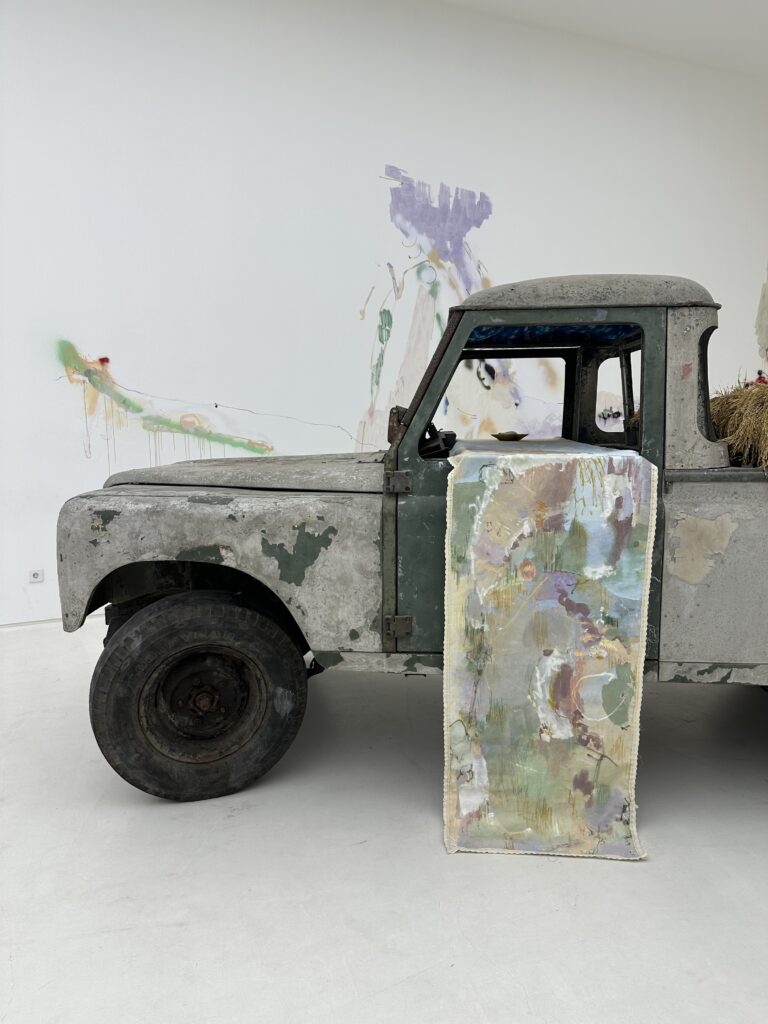
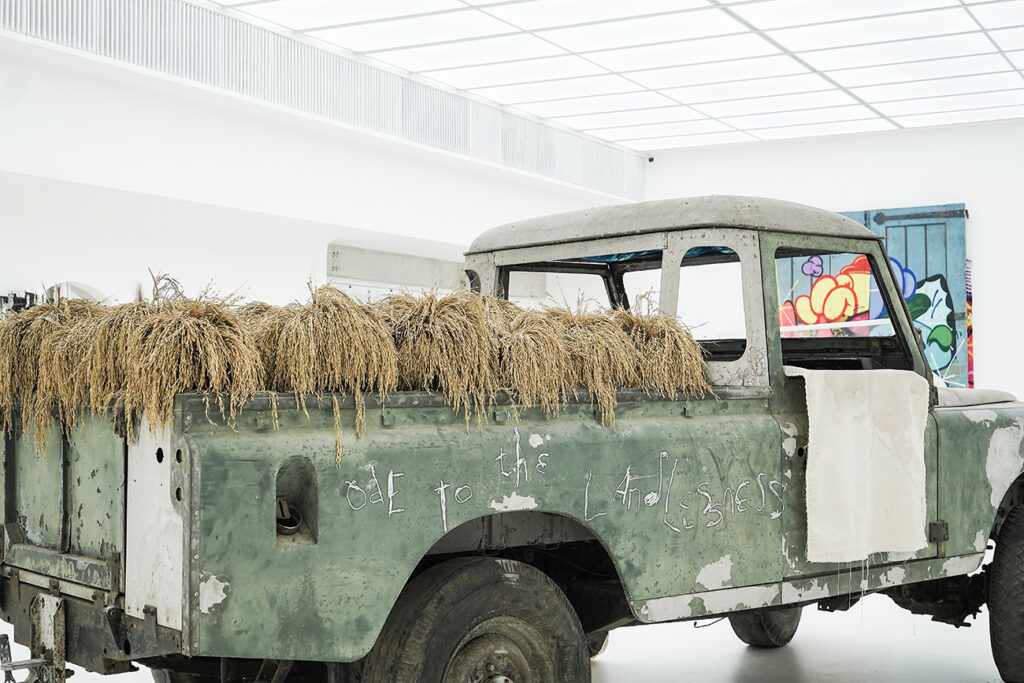
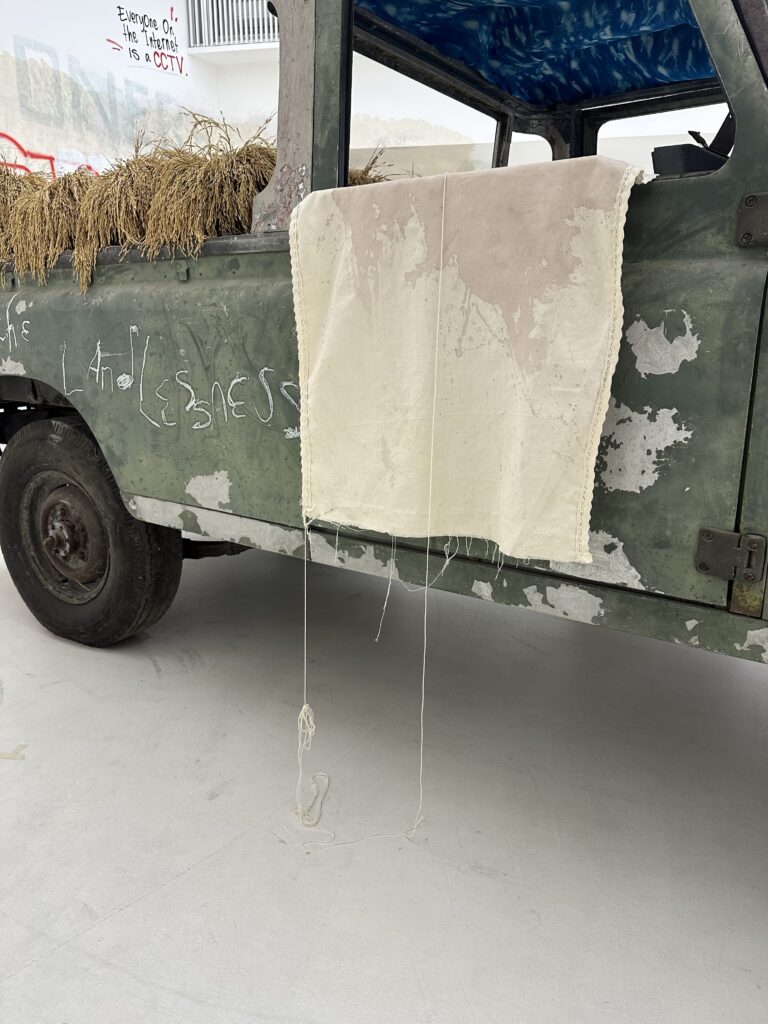
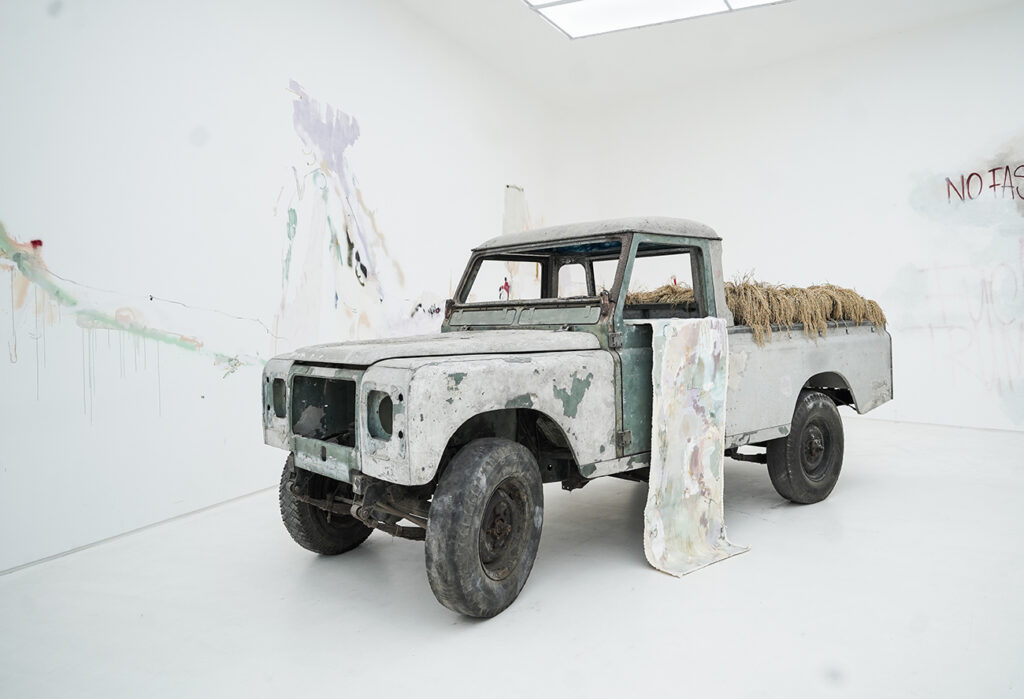
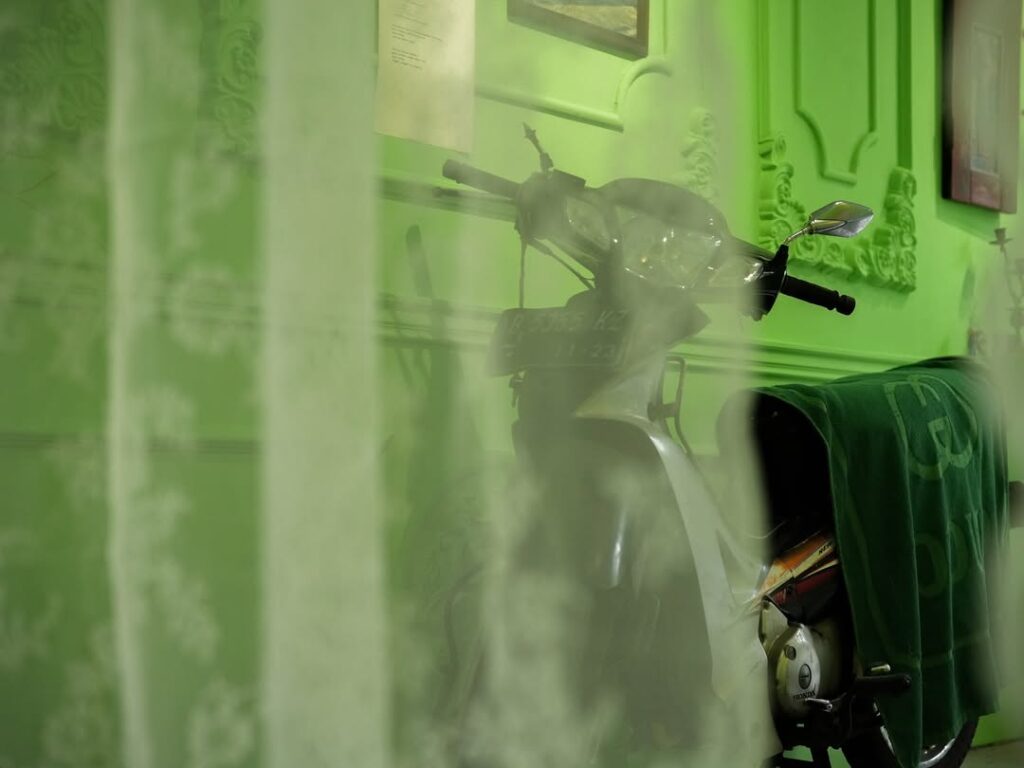
In Sicovecas’ work, the object placed in the exhibition space functions not merely as an installation element, but as a material body bearing layers of spatial memory. An old car, positioned at the center of the installation, is presented in a state far removed from its original function of mobility. Its faded paint, its form stripped of its utilitarian context, and the harvested paddy filling its bed suggest an object undergoing a profound semantic shift. It no longer moves; rather, it halts as an artifact containing the sedimented traces of lived experience and spatial memory.
The title of the work, Ode to the Landlessness, provides a crucial lens for this reading. According to the artist’s reflections, the work departs from the spatial memory of the Pogung area—a district once defined by rice paddies and open spaces, now steadily consumed by dense urbanization. For Sicovecas, this landscape is not a mere geographical backdrop, but an integral part of a lived experience that has shaped the body’s relationship to space since childhood. Memories of pedaling a bicycle through the fields, mapping every narrow alleyway, and eventually returning to a site rendered unrecognizable, form a mnemonic cartography that underpins this work.
Within this framework, the car in the gallery becomes a symbol of this very landscape transformation. A modern object typically associated with urban mobility now serves as a vessel for agrarian materiality. The hay filling its bed creates a stark friction between two distinct spatial regimes. On one hand, the car represents the logic of modernity—vehicular infrastructure and the hyper-mobility of the city. On the other hand, the hay evokes agricultural cycles: the harvest, the soil, and the decelerated rhythm of rural life. The convergence of these two elements yields a hybrid landscape, revealing how agrarian memory persists amidst aggressive urban restructuring.
The visual gestures etched across the object’s surface further amplify the relationship between the artist’s body and the chosen materials. These marks do not function as symbolic imagery meant to be decoded, but rather as indexical traces of action upon the object’s skin. In this regard, Sicovecas sustains the foundational logic of street art—a praxis that treats the city’s surfaces as a living canvas; a site where visual gestures emerge, fade, and resurface over time. Yet, upon being displaced into the gallery space, these gestures transform. The surface, typically found on an urban wall, is now mapped onto the body of an object carrying its own material history. The car functions as a surrogate for the street wall, while simultaneously generating new layers of meaning concerning spatial memory and the shifting urban landscape.
Through this configuration, Sicovecas’s work speaks not only to the act of marking surfaces but also to the intricate entanglement of the body, the land, and spatial memory. The immobilized car, the encroaching hay, and the accumulation of visual gestures converge to illustrate how urban development invariably leaves a residue of loss: the dispossession of land, the erasure of historical landscapes, and the vanishing of the ways of life once tethered to those spaces.
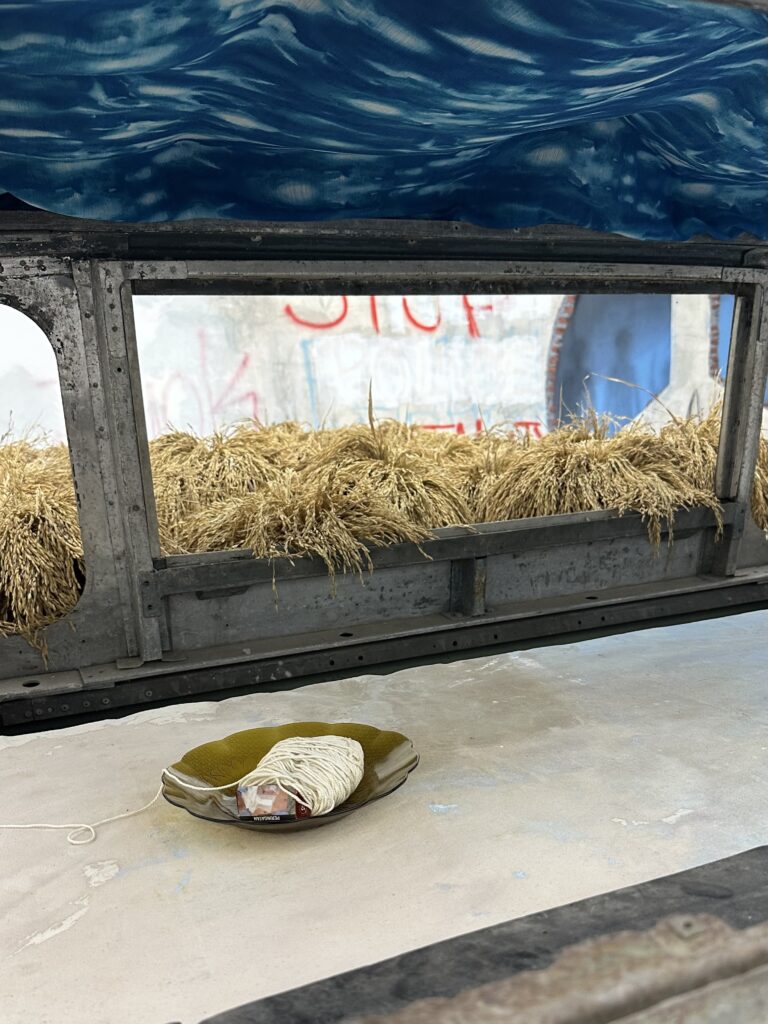
This stratification of memory is further materialized through a long canvas that extends outward from the car window. Bordered on three sides with sewn lace, it mimics a tablecloth draped across the gallery space. However, as it nears its end, the lace remains unstitched; sections of the canvas are left blank, with the needle and thread abandoned in the fabric. This deliberate incompletion evokes a sense of suspended labor—as if a process initiated in the past continues into the present, its final trajectory left radically uncertain.
The trailing thread is then pulled toward a table near the steering wheel, wound around a cigarette pack—an unassuming motif of working-class daily life—and left resting on a brown glass plate, the kind of ubiquitous freebie given away at a local shop. These objects ground the installation in the tactile reality of the everyday while unlocking the artist’s personal memories of a warung (food stall) that once occupied this very site. During his university years, Sicovecas frequented this spot, where a residential terrace had been converted into a modest eatery called Zupparella. This seemingly mundane experience anchors a persistent spatial memory that endures today, outlasting the physical architecture that once housed it.
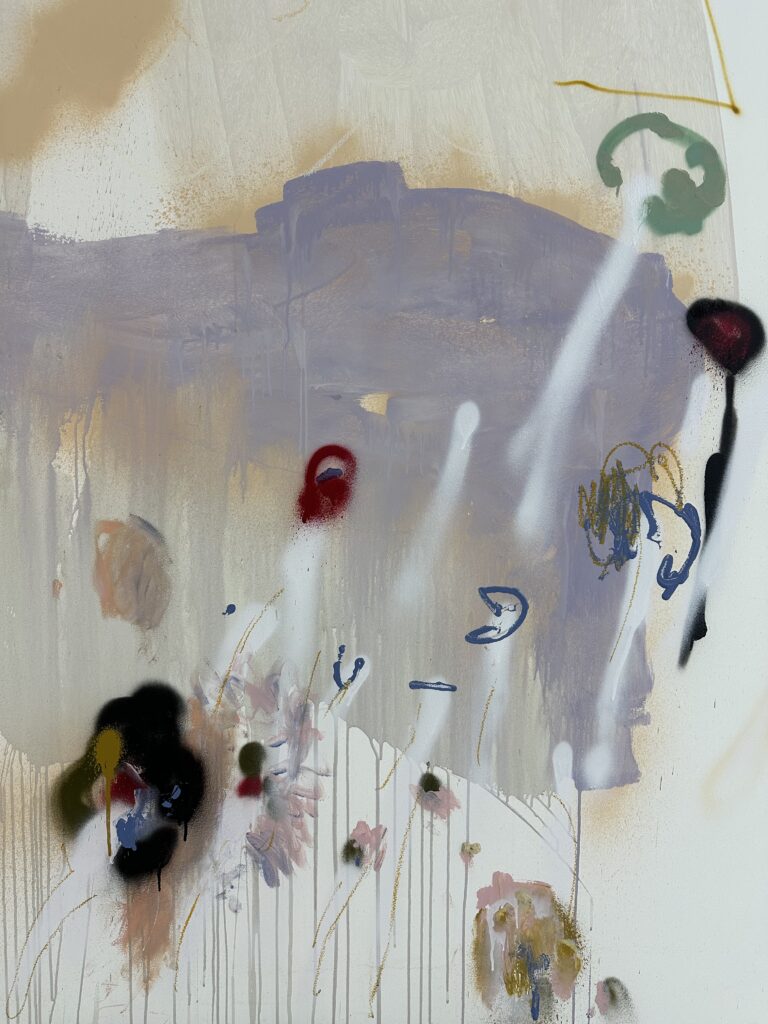
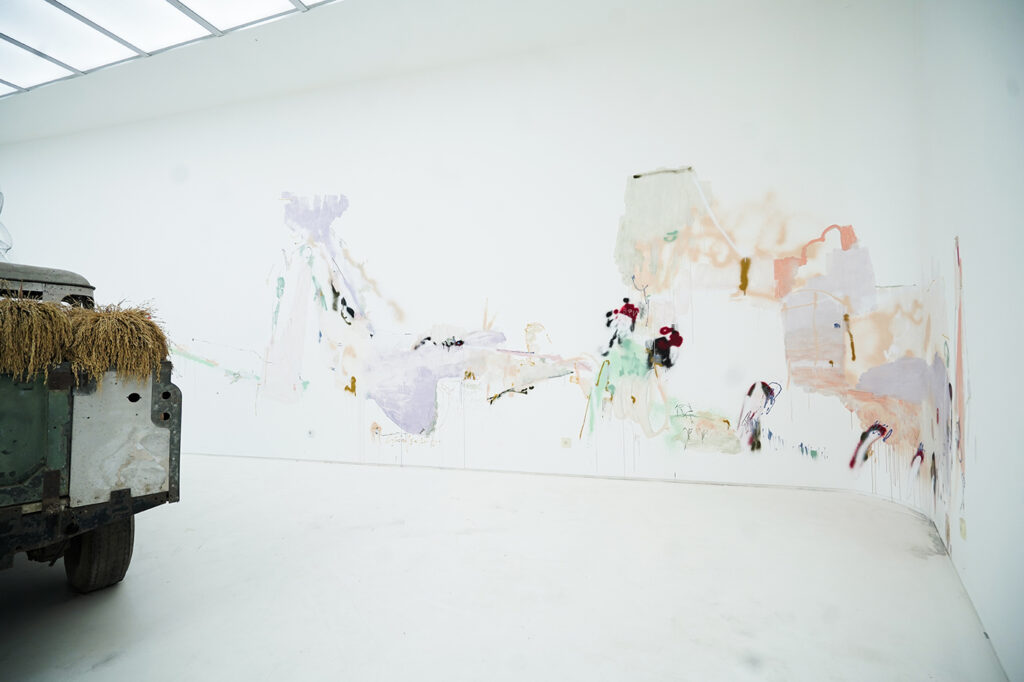
Meanwhile, a sprawling painting spans the gallery wall. While seemingly abstract at first glance, it is designed to unveil fragmented landscapes read sequentially from left to right. On the far left, the linework references Merapi volcano, the enduring geographical and visual anchor of the Yogyakarta region. Moving toward the center, these forms dissolve into doodles of rice paddies, houses, and doors. Interspersed among them are representations of BPN (National Land Agency) boundary markers, ubiquitous fixtures in agrarian plots. Yet, as the painting progresses to the right, these rigid pegs subtly metamorphose into flowers adorning a front yard. This visual progression traces a trajectory from the expansive natural landscape into the enclosed, intimate sphere of domesticity.
Through this constellation of elements, Sicovecas offers more than a meditation on the physical dispossession of land; he examines the gradual mutation of spatial memory in tandem with urban flux. The car, the harvested rice, the unfinished canvas, and the wall painting oscillating between Merapi Volcano and a suburban yard collectively construct a visual narrative of a space in perpetual transition—moving from the expanses of an agrarian past into the increasingly fragmented domesticity of contemporary urban life.
written by Donna Carolina
home2home: listening through walls (2025)
solo presentation, mini documentary screening, zine launch – readyspace gallery, yogyakarta, Indonesia
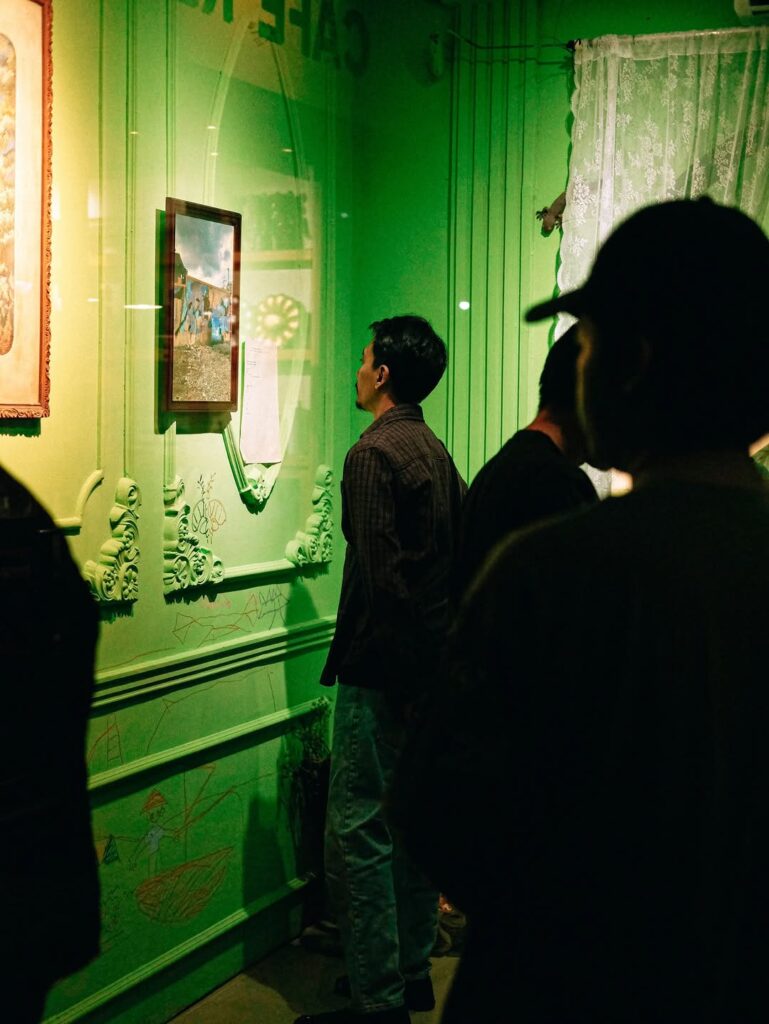
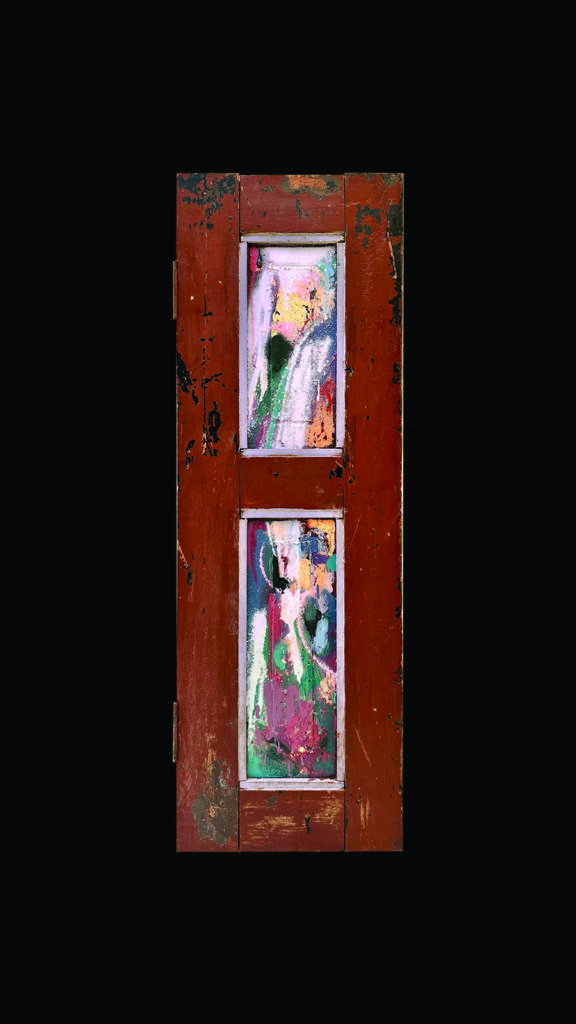
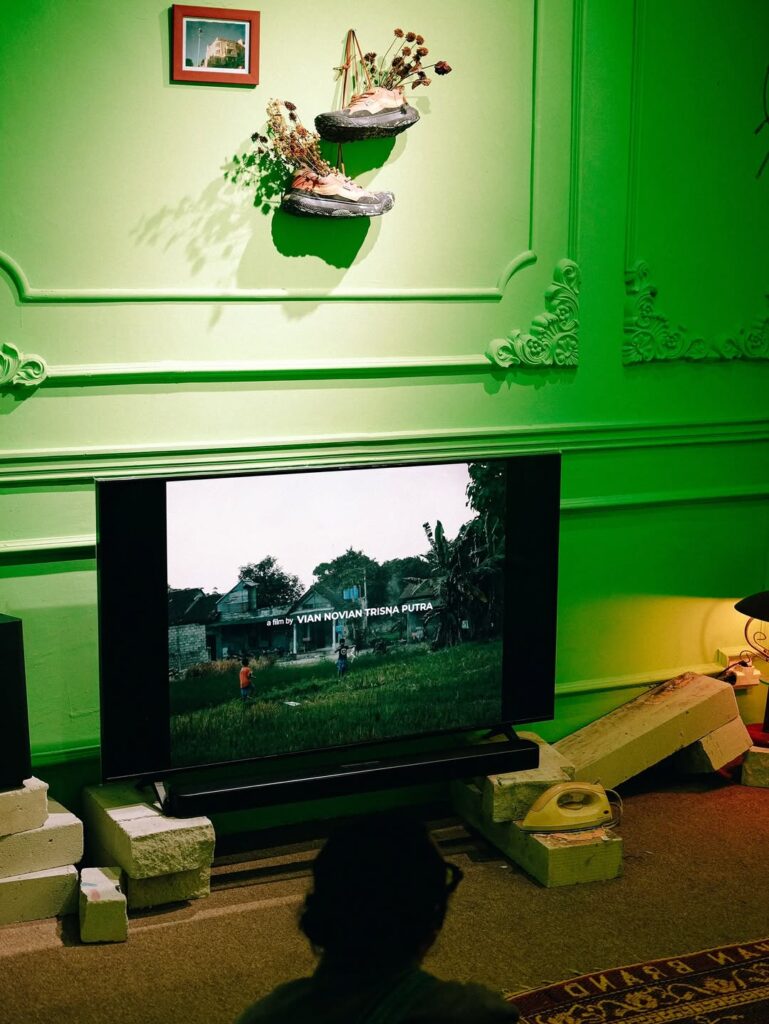
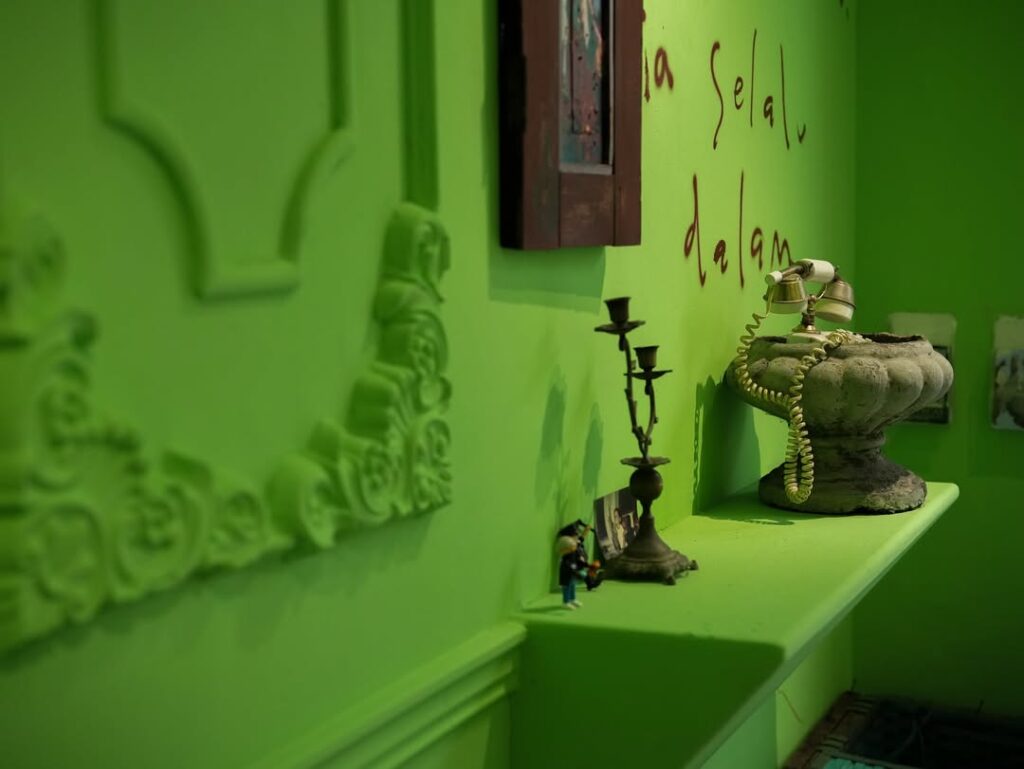
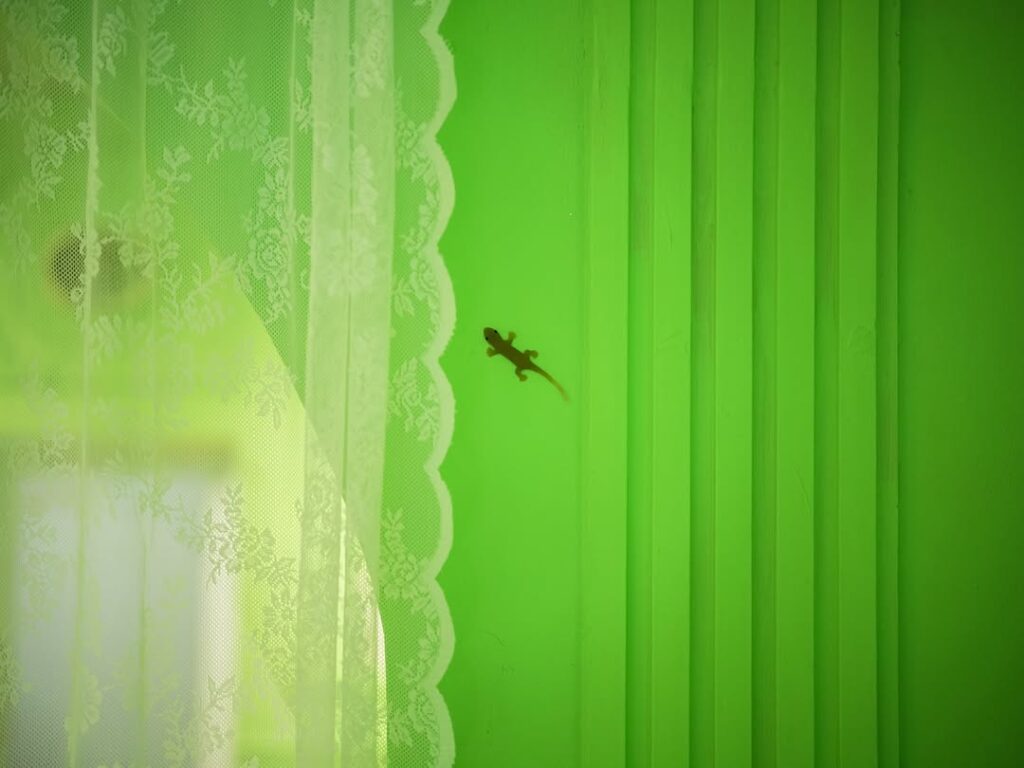
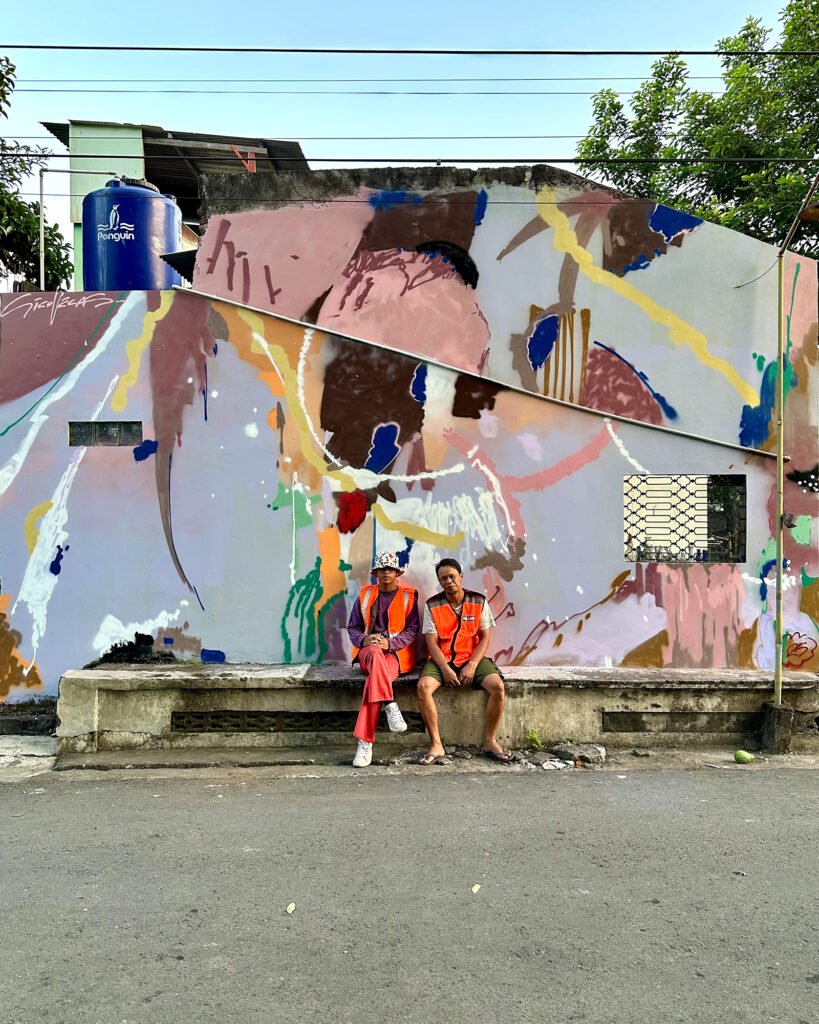
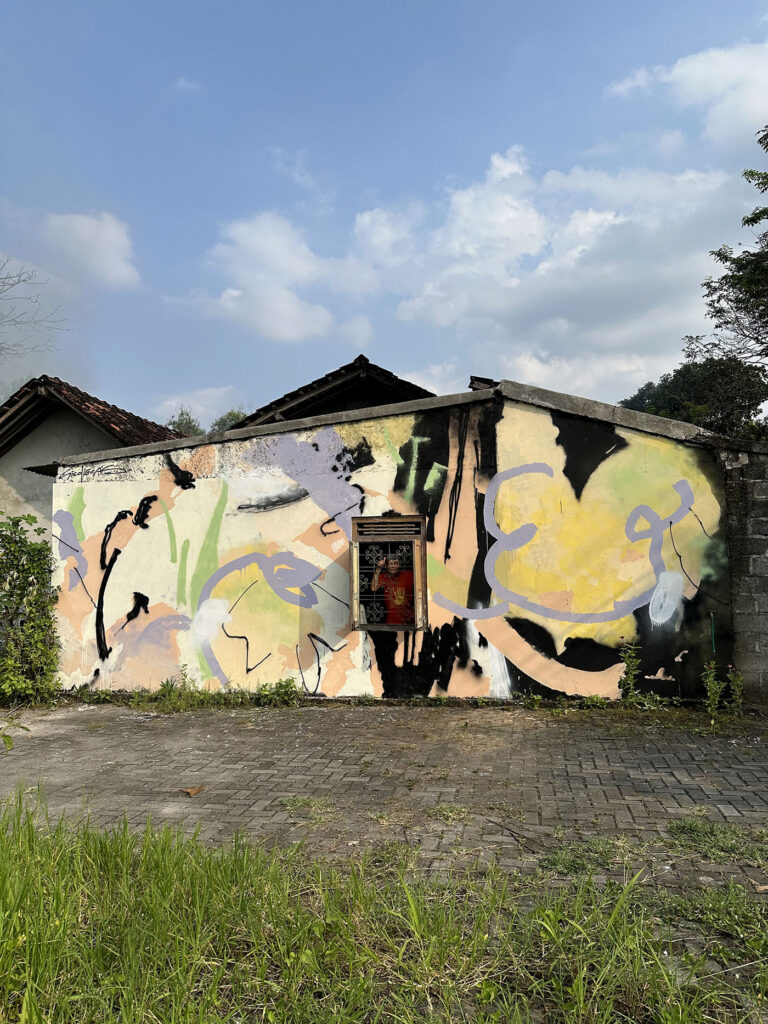
Creating art in public space is full of surprises. There’s uncertainty, and there’s the constant flow of life around the spot you choose to paint. For me, a peaceful day ends with a collection of mural photos taken from different angles — a kind of fulfilment that words often fail to capture. But there are also days when I feel completely unwelcome. My painting is painted over by another street artist. Or the wall is torn down, swallowed by the hunger of development. Still, something in me keeps wanting to return. Maybe that’s where the beauty lies.
Living on the rural edge of a city known as the “centre of art and culture” is a quiet privilege. Every house feels like a possible canvas, waiting for a story. I knock on doors as a stranger offering unsolicited artwork — and yet, they welcome me like an old friend. A plate of home-cooked food, a jar of rice crackers, an endless flow of iced tea, and a thank-you — not just for the mural, but for stirring something inside them.
Some wonder why I spend so much paint, time, and energy for nothing. But this was never just about murals — it’s about conversations. About human connection. A quiet exchange that runs on sincerity.
This project, at its core, is a celebration of human relationships grounded in care — an attempt to archive the lives and stories of six homeowners whose walls became part of this journey. What I was looking for slowly evolved over time. The more I painted, the more I learned about their lives — the fragile parts, usually hidden behind routine. It began to feel like I was offering nourishment for the soul, not just a mural. In between painting sessions, they would invite me to sit with them. I was no longer just an artist, but a listener.
One afternoon, in the living room of one of the homes, I listened to a man share his story — a former Kraton palace servant. His back now hunched, but from the way he spoke and the vintage photos hanging on the wall, it was clear he was once a strong warrior. These days, he spends his time collecting firewood and making chicken pellets by hand. Yet a part of his spirit still lives in the past.
And that’s when I realized: not everything needs fixing. Some things simply need to be heard.
There are many ways to show love and care. Maybe this is mine. From graffiti to humanity — I believe there’s always a bridge between the two.
written by sicovecas
behind the curtains (2024)
solo exhibition – artsphere gallery, jakarta, Indonesia
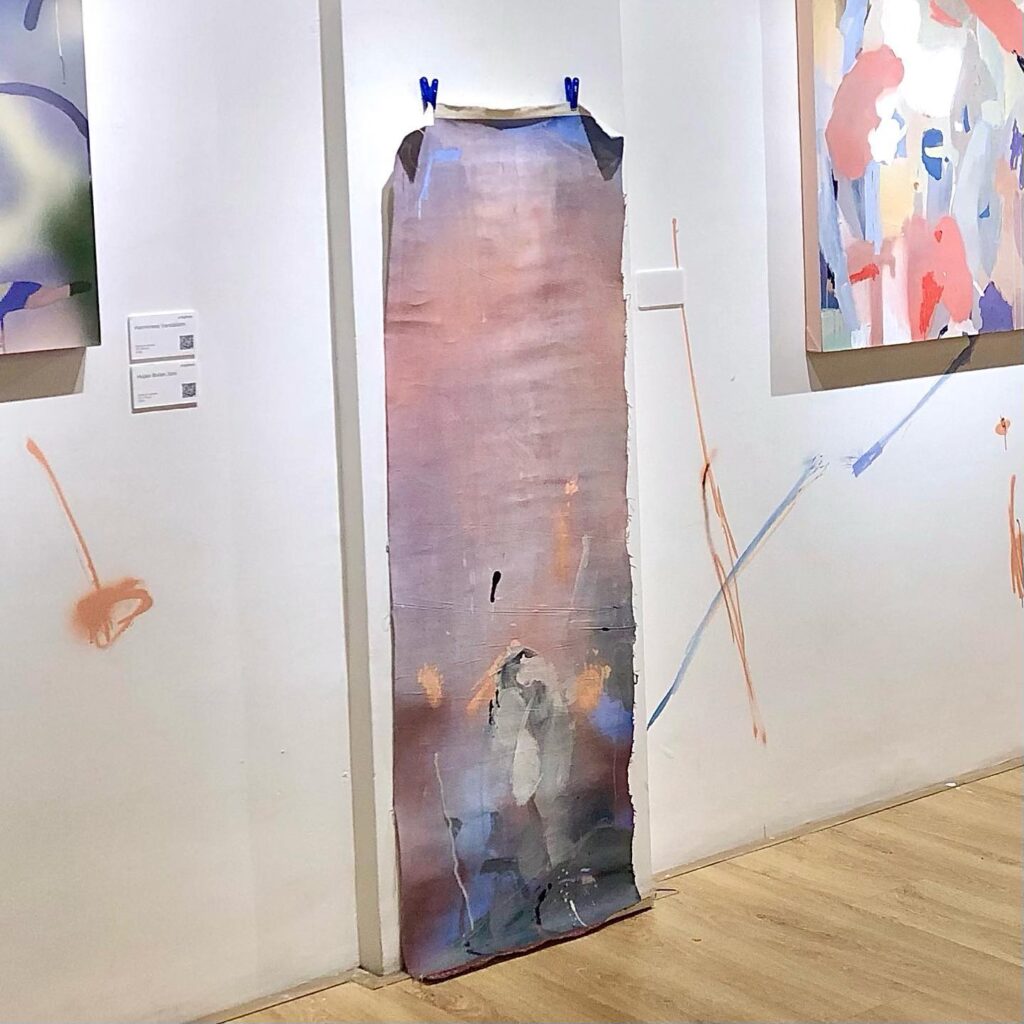
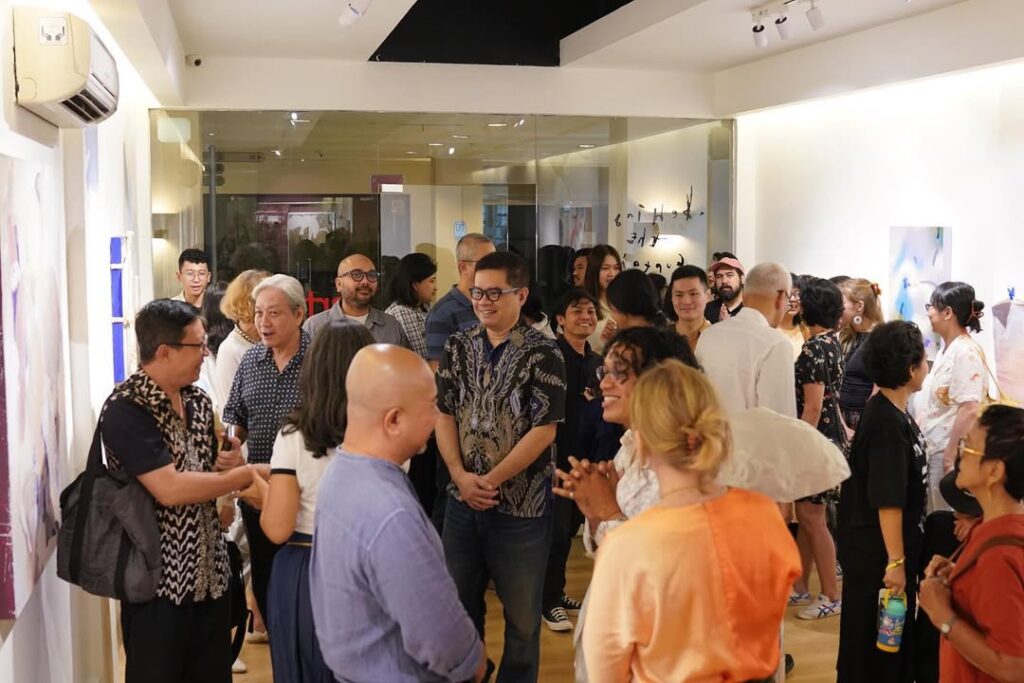
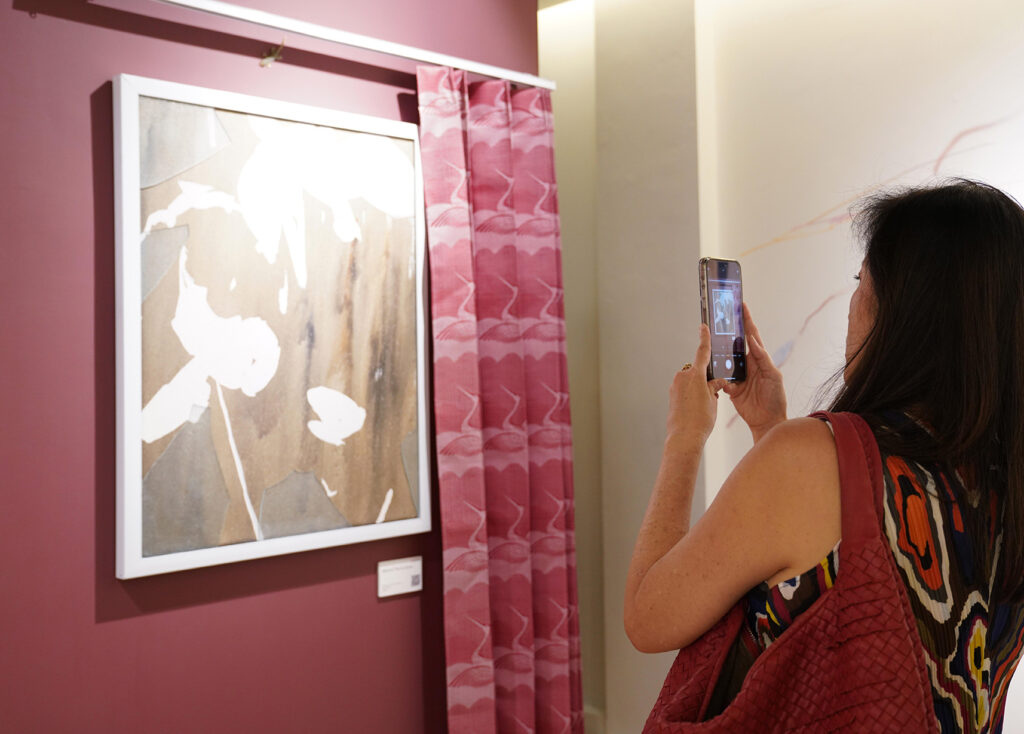
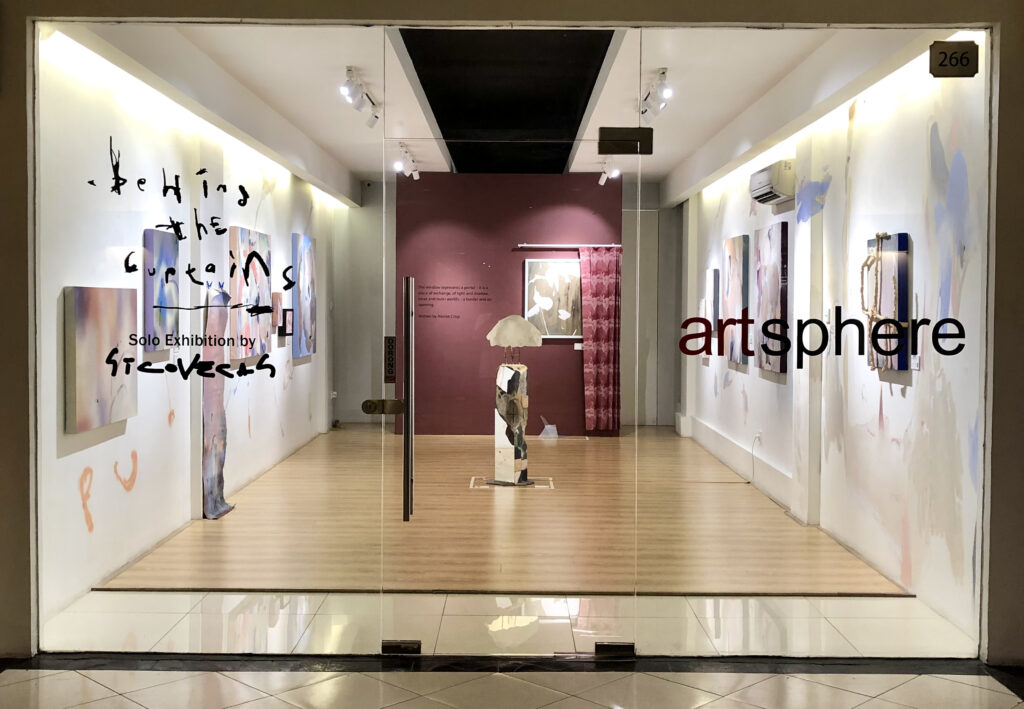
When I first met Sicovecas, his friends described him to me as a “homeboy”. He really loved his city, Yogyakarta, they told me, and this was clear from day one of knowing him. His love of the city was infectious. In the early days I was in Jogja he showed me all the nooks and crannies of neighbourhoods from north to south. He had an extensive knowledge of every alleyway, every shortcut and what felt like every story from every street.
So it made sense that he was a graffiti artist – a street artist. What better way to be a homeboy, to take in and appreciate your city, than engaging in an artform that is fundamentally about “place”? Often going by the initial three letters, “Sic”, a play on “as I see”, his art is an embodied practice of mapping the city’s shapes, peculiarities and communities as he saw it, and reflecting this back through his pieces – small homages to home.
Over the past few years Sicovecas has expanded his practice, moving between his very public painting on the street to the interior of his home studio where he worked on canvas. This new practice has come with its own set of questions and challenges: How do you translate the life and energy that comes
of emotion. And once these pieces were done, only then were they released to the wild, to be displayed in a gallery and observed by others. In his graffiti practice and his studio practice he finds himself working between wholly public art and art made in private for an audience. with painting on the street – the irregular shapes and textures of the walls, the changes in light, the soundtrack of passing motorbikes and sate sellers, the wall’s owner watching (with excitement or with apprehension) as you transform their space, kids asking questions, neighbours passing you iced tea, the communal and relational aspects of graffiti, the “senseplace” of graffiti as Richard Cook (2024) calls it, onto the calm space of the canvas?
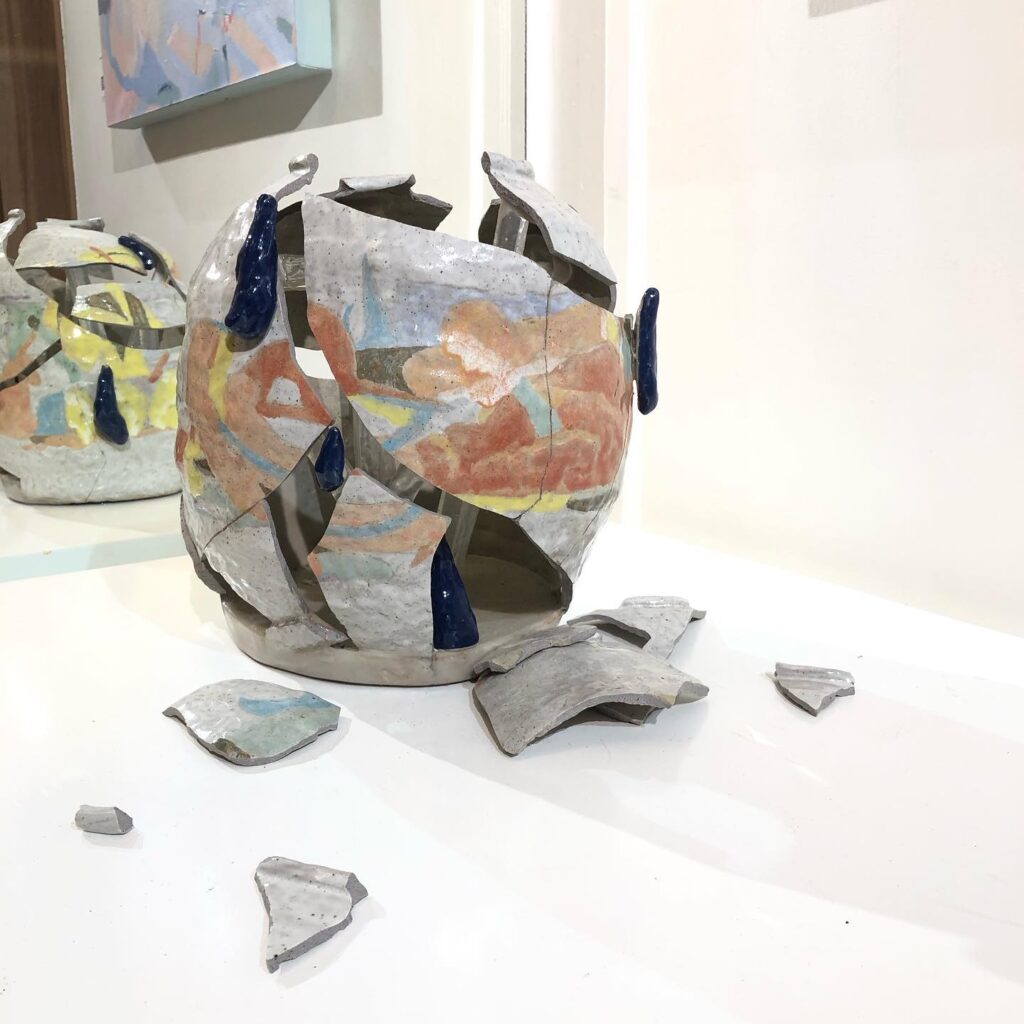
And at the same time, what did it mean to paint in the actual home? Sicovecas noticed that the process of painting inside his private space made his creations more intimate. What he painted on the canvas, and increasingly domestic objects like ceramics, rugs and mirrors, became a mapping of his internal landscape, where he considered human vulnerability and the sensations and textures
For his solo exhibition Behind the Curtains at Artsphere, Sicovecas presents a series of paintings and installations that reflect on this reflection, by centering on a common household feature, the window. For Sicovecas, the window represents a portal – it is a place of exchange, of light and shadow, inner and outer worlds – a border and an opening. In this exhibition we see pieces reflecting a culmination of 18 years of contemplating art creation and creating home through art.
Some works displayed are poignant in their sense of solitude, such as “golden sun bathed in a sleepless dawn” and “shrub symphony”, which through Sic’s use of light and shade draw the audience into his studio as he sits looking out into the movement of the world while he is in the calm, canvas in front of him, at different times of the day. In others we experience the rush of the city and the shock that comes with returning to the street and moving between spaces, such as in “maceeeet” and “inbetween (rest & roar)”.
Perhaps bridging his graffiti most clearly with his studio work are the two paintings “marijan’s neighbor” and “rock & rubble” and installation “aren’t we all the same” that reflect on the bones of houses, abandoned and left to nature, which Sicovecas playfully responds to as an onlooker peering through the window into the worlds of those who came before and what is left behind.
The title Behind the curtains itself suggests control. If creating art in the studio is the private act of creating art for the public, Sicovecas is attempting to draw back the curtain to show you the whole process, so come with your iced tea and your neighbours, sit down and become part of it all.
written by Harriet Crisp